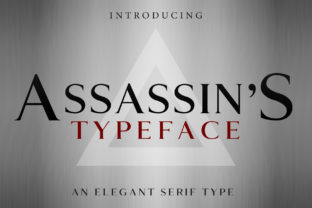
Assassin s: A Bold Serif Font Inspired by the Video Game Series
Assassin s is more than just a font—it’s a visual statement. Inspired by the iconic video game series, Assassin’s Creed, this bold serif typeface brings a sense of mystery, elegance, and power to any design. Whether you're creating a website, branding a business, or designing promotional materials, Assassin s offers a unique aesthetic that stands out in a sea of generic fonts.
Why Choose Assassin s?
For designers and content creators, Assassin s provides a striking alternative to standard sans-serif or cursive fonts. Its bold weight and clean lines make it ideal for headlines, logos, and other prominent text elements. The font's inspiration from the Assassin’s Creed universe adds a layer of storytelling and character that can elevate your project’s visual appeal.
But before you jump into using Assassin s, there are several common mistakes to avoid. Understanding these pitfalls can help you make better design choices and ensure your use of the font aligns with your goals.
Common Mistakes When Using Assassin s
Many users overlook key considerations when selecting and applying Assassin s. Here are some of the most frequent errors:
- Not considering readability. While Assassin s has a strong visual presence, its boldness can sometimes reduce legibility, especially at smaller sizes.
- Ignoring font pairing. Using Assassin s as the only font in a design can create an overwhelming effect. Pairing it with complementary fonts can enhance balance and clarity.
- Overlooking licensing restrictions. Not all versions of Assassin s are free to use. Always check the licensing terms to avoid legal issues.
- Using it inappropriately. Assassin s is best suited for specific contexts—such as branding, headers, or titles. Using it for body text may not be the best choice.
- Failing to test across devices. How the font looks on a desktop versus a mobile device can vary significantly. Always preview your design on different platforms.
The Impact of These Mistakes
Making these mistakes can lead to a variety of negative outcomes. Poor readability can confuse your audience and diminish the effectiveness of your message. Inappropriate font pairing can result in a cluttered, unprofessional look. Legal issues from improper licensing can damage your brand’s reputation and lead to costly consequences.
Additionally, using Assassin s in unsuitable contexts can create a disjointed user experience. If your design relies too heavily on the font’s bold style, it may fail to communicate your intended message clearly.
How to Avoid These Mistakes
Here are practical steps to ensure you use Assassin s effectively:
- Use it strategically. Save Assassin s for headlines, logos, or key phrases where its bold nature can make an impact without overshadowing the rest of your design.
- Pair it wisely. Combine Assassin s with a readable sans-serif or serif font for body text. This creates a balanced, professional look.
- Check licensing details. Before downloading or purchasing Assassin s, verify the license agreement to ensure it fits your usage needs—whether personal, commercial, or open-source.
- Test on multiple devices. Ensure your design looks consistent across different screen sizes and resolutions. Adjust font size and spacing as needed.
- Consider accessibility. Use sufficient contrast between the font color and background to improve readability for all users, including those with visual impairments.
Realistic Examples and Better Approaches
Imagine you're designing a website for a gaming blog. You decide to use Assassin s for the site title. That’s a great choice—it immediately conveys the theme and adds a unique flair. However, if you use the same font for all paragraphs, the design becomes visually overwhelming.
A better approach would be to pair Assassin s with a clean, modern sans-serif like Arial or Helvetica for the body text. This combination maintains the visual interest of the title while ensuring the rest of the content remains easy to read.
Another example: a small business owner wants to create a logo using Assassin s. They might be tempted to use the full font weight for everything. But by using a lighter weight for supporting text and a bolder weight for the main logo, they create a more refined and professional appearance.
What to Check Before Making a Decision
Before finalizing your choice of Assassin s, consider the following:
- Your target audience. Will they find the font appealing and easy to read? Does it match their expectations and preferences?
- Your design goals. Is the font helping you achieve your visual objectives, or is it getting in the way?
- Your budget. Are you using a free or paid version of the font? Does the cost justify the benefits it provides?
- Your platform requirements. Is the font supported by the software or platform you’re using? Does it render consistently across different systems?
- Your long-term plans. Will the font remain relevant as your project evolves? Can it adapt to future design changes?
Conclusion
Assassin s is a powerful tool for designers looking to add a distinctive visual element to their work. By understanding its strengths and limitations, you can use it effectively without falling into common traps. With careful planning, thoughtful pairing, and attention to detail, you can create designs that are both visually compelling and functionally sound.